
What an EV charger installation involves, survey to commissioning
Buying the charger is the easy part; the installation is what makes it safe and compliant. A proper EV charger install is a defined process from survey to commissioning, and knowing what each step involves helps you understand what you're paying for and why it must be done by a registered electrician.
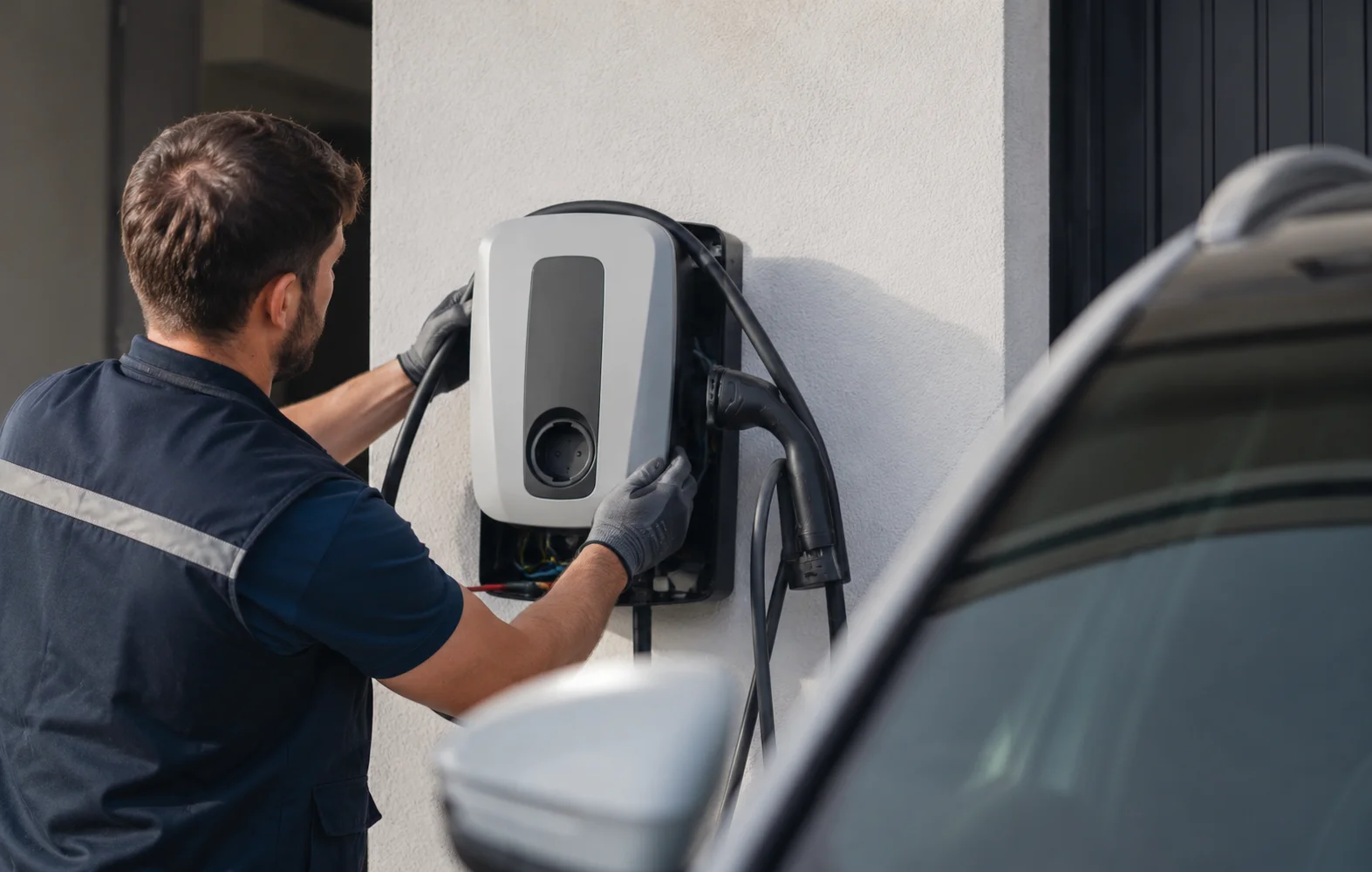
An EV charger installation runs from a survey to commissioning. First a survey checks the supply, the consumer unit and its capacity, the earthing arrangement, and the cable route and charger position. Then a dedicated circuit is run from the board to the charger sized for it, commonly a 32A radial for 7.4kW with the correct RCD protection (Type A with 6mA DC detection, or Type B) and, on the PME (TN-C-S) supplies common in Ireland, open-PEN protection (a device or an earth electrode arrangement) to IS 10101. The cable is routed and the charger mounted and connected. Finally the installation is tested, commissioned, certified, and any SEAI grant paperwork completed, then handed over. It must be carried out by a Safe Electric registered electrician.
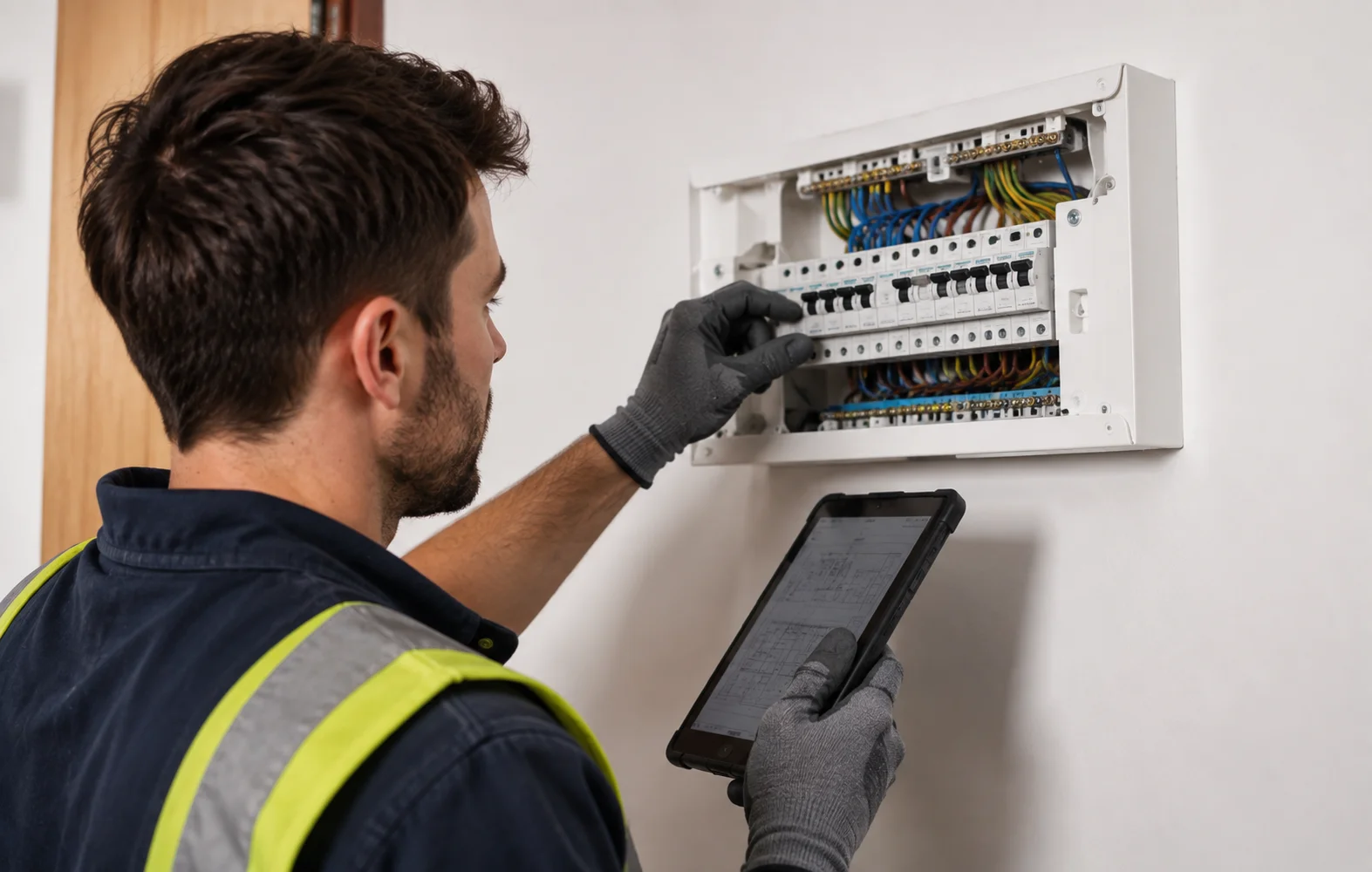
The survey
A good install starts with a survey, not a guess. The electrician checks the main supply and its capacity (whether load management is needed), the consumer unit and whether it has a spare way or needs work, the earthing arrangement (PME/TN-C-S or TT, which drives the open-PEN measures), and the best route for the cable and position for the charger. This is where the job is designed and where problems are found before, not during, the install.
The circuit and protection
- 1 A dedicated circuit from the consumer unit to the charger, sized for it (commonly a 32A radial for 7.4kW), correctly sized to the charger you're fitting.
- 2 RCD protection of the correct type (Type A with 6mA DC detection, or Type B) per the charger and IS 10101.
- 3 Correct overcurrent protection for the circuit.
- 4 A tidy, protected cable route from board to charge point.
Open-PEN protection
On the PME (TN-C-S) supplies common in Irish homes, an outdoor EV point needs special earthing measures, because a broken combined neutral-earth (open PEN) could make the car and charger live. IS 10101 requires open-PEN protection: either a charger with built-in PEN-fault protection that disconnects, or a dedicated earth electrode arrangement making the EV circuit effectively TT. Getting this right is the safety-critical part of an Irish EV install, and it's decided from the earthing arrangement found at survey.
Testing, certification and handover
Once installed, the circuit and charger are tested, the charger is commissioned and configured, and the installation is certified as compliant with IS 10101. The SEAI grant paperwork is completed where applicable, and the charger is handed over with a demonstration of how to use it. The certification is your evidence the work is safe and compliant. WEW supplies EV chargers and installation materials across Meath. Browse the range in our EV charging category to see chargers and accessories in stock. All work by a Safe Electric registered electrician.
Frequently Asked Questions
-
What does an EV charger installation involve?
A survey of the supply, consumer unit, earthing and cable route; a dedicated circuit from the board to the charger with the correct RCD protection; open-PEN protection for Irish PME supplies; mounting and connecting the charger; and testing, commissioning, certification and handover. It must be done by a Safe Electric registered electrician to IS 10101. -
Why does an Irish EV charger install need open-PEN protection?
Because most Irish homes have a PME (TN-C-S) supply where the earth comes from the supply neutral, and outdoors a broken neutral could make the car live. IS 10101 requires open-PEN protection a charger with built-in PEN-fault protection, or an earth electrode arrangement to manage this. It's the safety-critical part of the install. -
Can I install an EV charger myself?
No. An EV charger installation must be carried out and certified by a Safe Electric registered electrician to IS 10101, including the dedicated circuit, protection and open-PEN measures. Self-installation is unsafe, non-compliant and voids the SEAI grant.
Source it at WEW
WEW (Waveform Electrical Wholesale) is your electrical wholesaler and lighting expert in Meath, supplying fans, ventilation, EV charging and everything electrical to trade and homeowners. Call in to the counter or the showroom for stock, advice and everything referenced in this guide.